

WMU physics department helps NASA’s Artemis program with spaceflight materials research
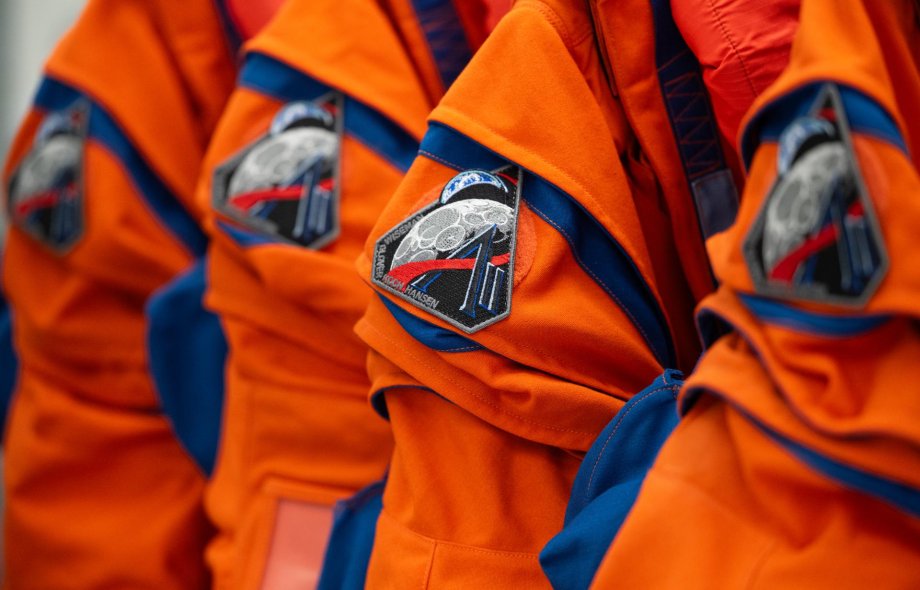
KALAMAZOO, Mich.—It takes the best and the brightest to pull off a successful space mission such as the recent Artemis II. Is it any wonder, then, that Western Michigan University’s own Department of Physics was involved?
WMU’s physics department in 2024 completed a major NASA‑sponsored research project in support of the Artemis and Lunar Gateway missions, contributing critical data to help ensure the reliability of spacecraft systems operating beyond Earth’s orbit.
The project centered on irradiation testing of spacecraft cables used in the Gateway lunar module’s propulsion and power systems. As spacecraft travel through the Van Allen radiation belts, they encounter intense streams of high‑energy protons that can degrade materials and jeopardize mission safety. WMU’s particle accelerator laboratory provided the specialized environment needed to simulate these conditions and evaluate cable performance under realistic space radiation exposure.
The collaboration was made possible through the leadership of Dr. Phil Ugorowski, a WMU physics alumnus, who, while working with NASA, identified the University’s 6 MV tandem Van de Graaff accelerator as uniquely suited for the required testing. His selection underscores both the strength of WMU’s accelerator facility and the continued impact of its alumni in national laboratories and space exploration programs.
The project was led by a multidisciplinary team within the Department of Physics:
- Dr. Asghar Kayani, department chair and director of the accelerator laboratory, provided scientific leadership and oversight.
- Josh Byers, machine shop manager, designed and fabricated custom hardware—including a heated sample holder capable of reaching 200 degrees Celsius—to replicate the thermal conditions spacecraft cables experience in orbit.
- Benjamin Gaudio, the department engineer, ensured that the cables were properly connected to the sample holder’s heating elements.
Undergraduate involvement was a defining feature of the project, reflecting WMU’s commitment to hands‑on, high‑impact learning. Students who contributed to experimental preparation, data collection and analysis included:
- Lucas Etienne Rudegeair, undergraduate physics student
- Andrew Thomas Libiran, now a master’s student in mathematics
- Jett Edward Thomas, physics alumnus
Their participation resulted in rare, career‑shaping experience working directly on NASA‑relevant research. “Our department is deeply committed to providing students with meaningful, experience-driven research opportunities,” Kayani says. “Projects like this show them that they can contribute to nationally significant scientific work long before they complete their degrees.”
All members of the project team were recognized with NASA and Artemis mission badges in acknowledgment of their contributions to one of the most ambitious space exploration efforts of the century. “Watching our students earn NASA and Artemis mission badges was incredibly rewarding,” Kayani says. “It’s a reminder that when we invest in hands‑on learning, our students rise to the challenge.”
The Artemis program represents a renewed global commitment to exploration and long‑term human presence beyond Earth. WMU’s role in this project highlights the University’s research capabilities, the expertise of its faculty and staff, and the transformative opportunities available to its students.
For more WMU news, arts and events, visit WMU news online.