

Lessons in language: Mastering Japanese, computer engineering opens doors for WMU grad
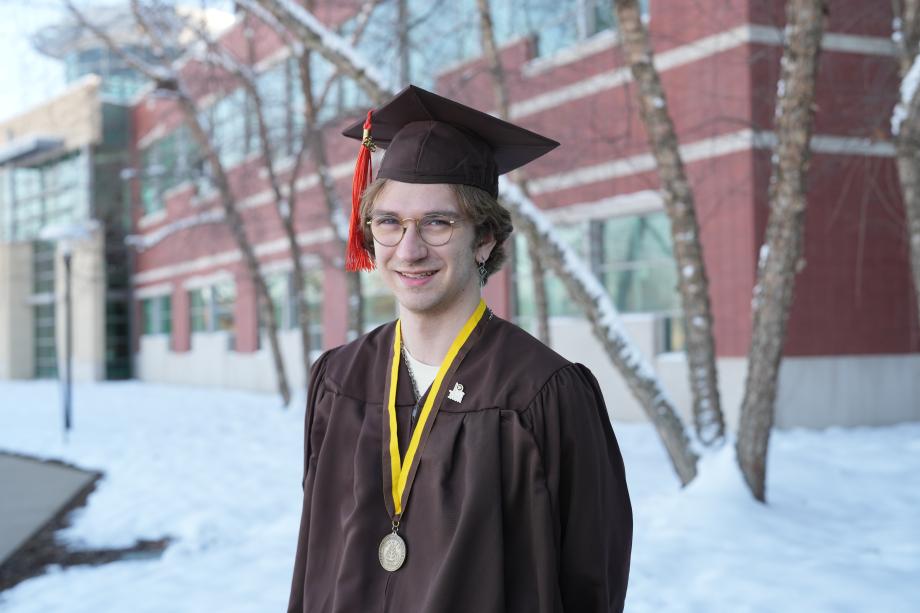
KALAMAZOO, Mich.—Standing high atop the mountains above Nagano, Japan, Noah Braasch was on top of the world in more ways than one. In 2023, the Western Michigan University student had realized his dream of studying abroad and was celebrating with an epic snowboarding trip.
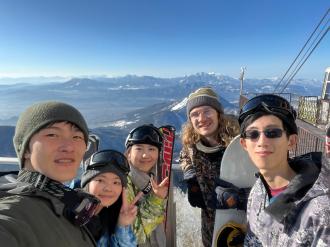
“I started thinking about it in 2019 while I was still in high school, ... but that was sort of a pipe dream at that point in time,” he says. “I had never left the country, never flown by myself, so it was a huge step.”
A science-minded student with a future in computers, Braasch found learning new languages uniquely challenging. “I nearly failed French in high school,” he remembers. But with determination and the support of Western’s Department of World Languages and Literatures, he’ll be graduating Saturday, Dec. 13, with bachelor’s degrees in both computer engineering and Japanese as well as recognition as the 2023 Presidential Scholar in world languages and literatures—the highest honor WMU bestows on undergraduates.
Life-changing experience
When he graduated high school, Braasch enrolled at Kalamazoo Valley Community College to pursue an associate degree in computer engineering. At the same time, he enrolled in some Japanese courses at Western with a goal of becoming proficient enough to qualify for study abroad once he transferred to WMU.
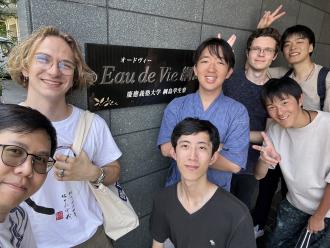
He also knew he would need a scholarship to achieve his dream, and he set his sights on the full-ride Murakami Scholarship to study for a year at Keio University in Tokyo.
“From the beginning when I arrived at Western, I was thinking about how I could set myself apart in the language department to show how I’m an ideal candidate for this opportunity.”
In addition to writing a computer program to generate Japanese flash cards for himself to practice on his own time, Braasch also built rapport with WMU Japanese program faculty such as Dr. Carlos Pimentel, associate professor of Japanese, and Noriko Tanaka, instructor of Japanese, who gave him opportunities to grade papers for classes and become a tutor.
“I kept finding opportunities to make a name for myself within the department, and through that, I was selected for the Murakami Scholarship,” Braasch says.

The scholarship opened the door to an immersive experience that would prove life-changing. From attending an elite university in the heart of Tokyo to snowboarding through the mountains of Nagano to visiting a waterfall in Nikko, Braasch soaked up every experience he could.
“The Keio campus is about as downtown as you can imagine,” he says. “You’d get off the train and turn and see the Tokyo Tower on the skyline as you walked to class. I saw famous landmarks and visited historic cities and went to Disneyland Tokyo and Universal Studios Japan and made friends from all over the world.”
The experience gave him new goals of attending graduate school in Japan and finding a computer engineering job abroad.
“I had the realization that this is where I want to spend my life in the future.”
Engineering success
In a way, Braasch mastered two foreign languages while at Western: Japanese and computer coding. He credits the University’s diverse computer engineering curriculum for setting him up for career success.
“My foundation is really strong, and it’s given me a good level of exposure to most subfields of computer engineering,” he says.
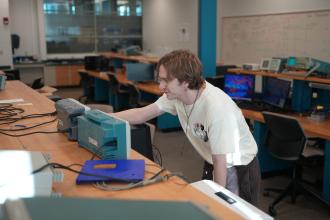
Dr. Janos Grantner’s microcontroller applications class ignited a spark in Braasch that helped him find his fit in the computer engineering field: embedded systems.
“Dr. Grantner’s labs are extremely challenging in the best way possible,” Braasch says, recalling a lab that required students to write code to interface with the speedometer and tachometer of a vehicle gauge cluster. “It was not easy, but coming out of it, I knew all these communication protocols, all these concepts regarding microcontrollers. It gives you a very employable skill set that a lot of companies are looking for.”
Braasch leaned into Experience-Driven Learning opportunities outside the classroom to expand his skill set even more, joining the command and data handling team on the Western Aerospace Launch Initiative, a registered student organization, and completing undergraduate research with some of Western’s world-class faculty.
Alongside Dr. Pablo Gomez, professor of electrical and computer engineering, Braasch designed test beds to emulate and ultimately find ways to prevent cyberattacks on power grids. Braasch also worked with Dr. Muralidhar Ghantasala, professor of mechanical and aerospace engineering, on a novel automotive vehicle sensor that could potentially be patented.
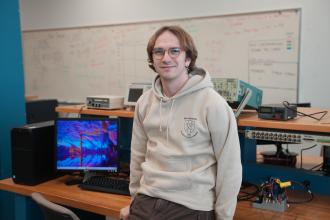
“Western’s engineering programs give you exposure to all sorts of things to let you figure out what exactly it is you want to do, and it’s done in a way that you learn by doing, which for me is the best way to do things,” Braasch says. “I’ve gotten to do a little bit of everything, and during interviews, companies have specifically told me that’s what they’re looking for.”
As he prepares to graduate, Braasch is looking forward to using all the knowledge and experiences he’s racked up at Western to take his engineering career to the next level.
“I now have a goal for where I want to live; I have a goal for what I want to do workwise,” he says. “I’ve developed skills I would not have been able to develop on my own. It’s hard to say exactly how Western has helped set me up for success, because every aspect of my future has been impacted by my time here.”
For more WMU news, arts and events, visit WMU News online.